The future is barrier-free
How AI, robotics and embodied AI can enable participation
Why this lecture is important right now
When we talk about artificial intelligence, robotics and automation, we often focus on efficiency and productivity.
Their real potential lies in the question of participation, independence and dignity.
The future will be innovative if it leaves no one behind.
This presentation shows why accessibility is not a marginal issue, but one of the most important drivers of meaningful innovation.

Contents & Focus Areas
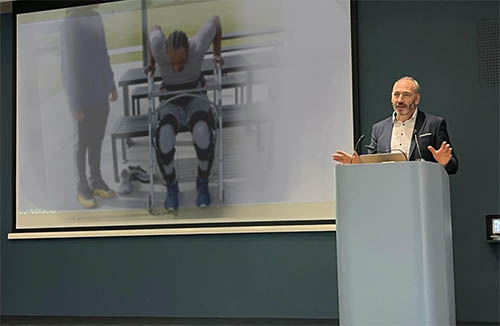
How robotics and exoskeletons support people in their everyday lives and at work
The role of embodied AI in assistance systems
Why innovation can create freedom
How technology breaks down barriers instead of creating new ones
For me, accessibility is a yardstick for how we want to use technology.
Innovation shows its value where it empowers people.
I have been working in the fields of AI, robotics and media innovation for many years. Hardly any other area demonstrates as clearly as the context of accessibility how technology can be used in a meaningful way.
What your audience takes away
New perspectives on innovation and inclusion
Specific examples from practice and research
Inspiration: seeing accessibility as an opportunity
Understanding the social significance of modern assistance systems
Institutions & Practice Partners (selection)






Who this lecture is particularly suitable for
Companies and organisations with social responsibility
Institutions from the education, health and public sectors
cAssociations, politics and administration
Events on the future, innovation and social change
Format & Style
The lecture combines illustrative examples, visual demonstrations and comprehensible classification. Complex technologies are explained in a tangible way. The aim is to open up perspectives and paint a positive picture of a barrier-free future.