Artificial intelligence is already part of many areas of our lives. It’s changing our everyday routines and entire professions. It helps us navigate, find information, and develop ideas. It can be incredibly useful, but it should never replace common sense. How can we make sure that doesn’t happen?
Artificial intelligence is already active in many areas of our lives. It is changing our everyday routines and entire professions. It helps us navigate, access information, and develop ideas. It can be extremely helpful, but it must not replace common sense. How can we achieve that?
We cannot trust AI blindly. AI makes mistakes, sometimes produces nonsense, and cannot replace human thinking. There is also the risk that AI could make us mentally lazy. AI in schools or at universities? It can write term papers, but it can also help practice vocabulary. How can we use the possibilities of AI in a way that expands our knowledge, stimulates our creativity, and allows us to focus more on the tasks that should be done by humans rather than machines?
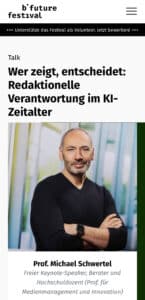
That is what we want to discuss with Jan Eggers from the hr science editorial team, with Dr. Harald Gapski, a member of the task force “AI in Education,” with Prof. Ulrike Cress from the Leibniz Institute for Knowledge Media, with Prof. Michael Schwertel, who works on creativity and copyright, and with the philosopher Prof. Dr. Judith Simon, who focuses on ethical issues in information technology.